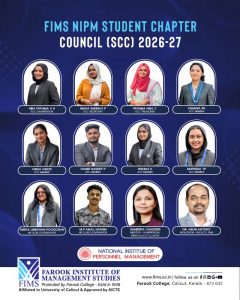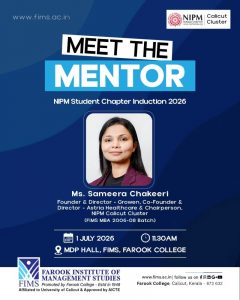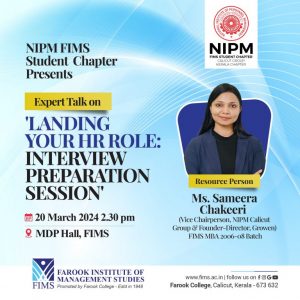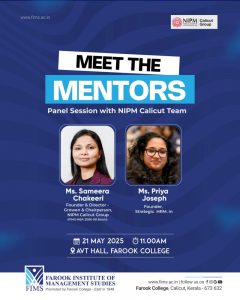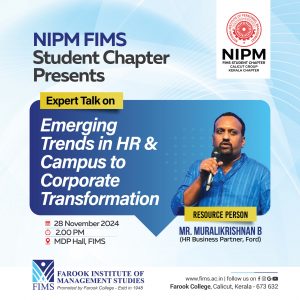
The NIPM Student Chapter at FIMS serves as a platform for students to enhance their knowledge and skills in the field of Human Resource Management. Established under the guidance of the National Institute of Personnel Management (NIPM), the chapter aims to bridge the gap between academic learning and industry practices through meaningful engagement with HR professionals and experts.
The chapter provides students with opportunities to participate in seminars, workshops, panel discussions, industrial interactions, and professional development programmes related to human resource management and organizational behaviour. These initiatives help students gain practical exposure to contemporary HR practices and emerging workplace trends.
Through its various activities, the NIPM Student Chapter fosters leadership, communication, teamwork, and professional networking among students. It serves as a vibrant learning platform that prepares future managers and HR professionals to meet the challenges of the evolving business environment.
The chapter aims to create a platform where students can explore various dimensions of Human Resource Management beyond the classroom. Through professional activities and industry interactions, students gain insights into recruitment and selection, employee engagement, performance management, training and development, industrial relations, labour laws, organizational behaviour, and emerging HR technologies.
The chapter also seeks to enhance students’ employability by providing opportunities to develop practical skills, professional networking, and industry exposure. By participating in chapter activities, students are better prepared to meet the challenges and expectations of modern organizations.
Membership and participation in the NIPM Student Chapter offer numerous benefits, including: